The New Historiographic Atlas
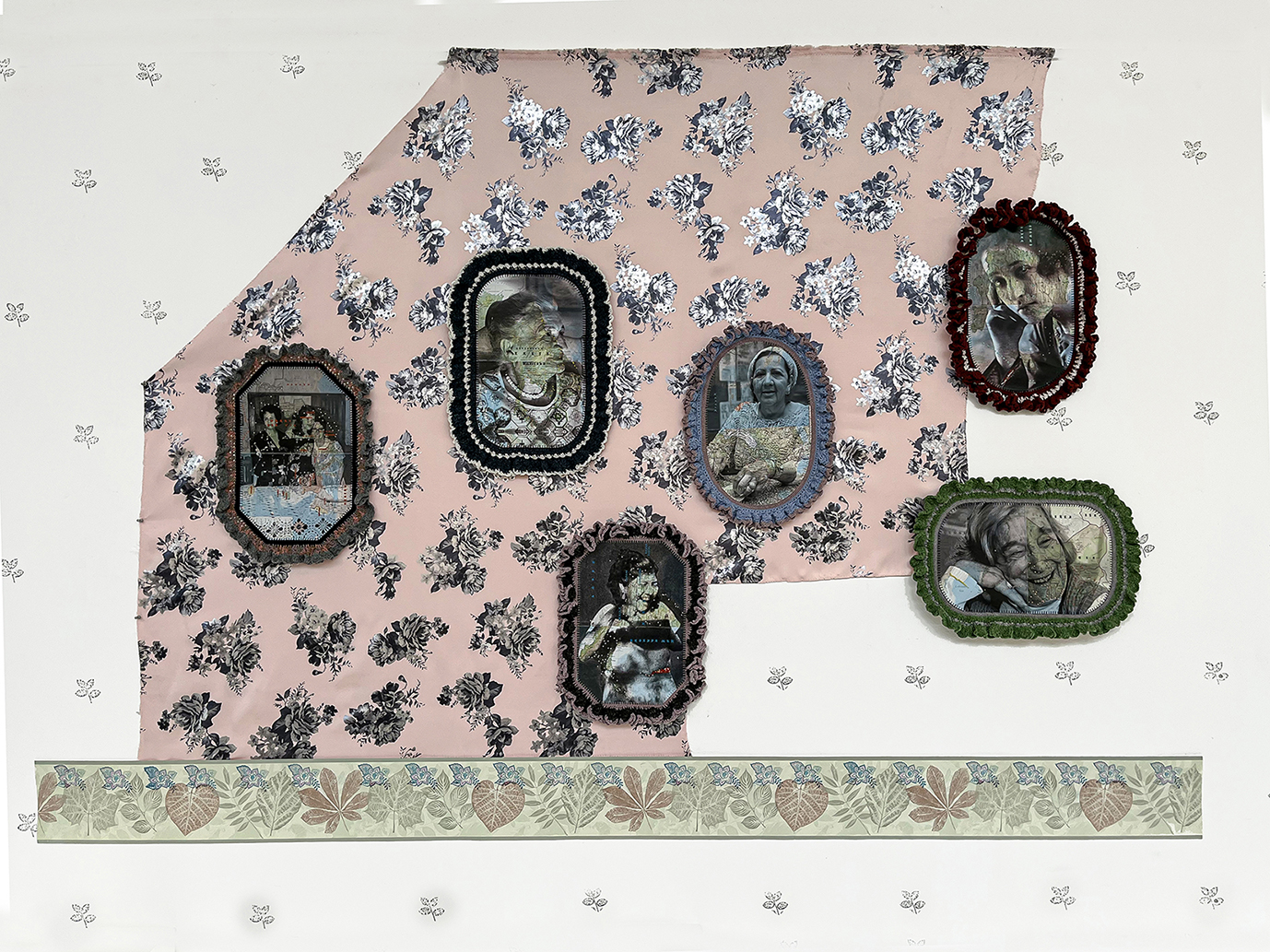
This work began with an encounter. I found a sewing box and an unfinished piece in a thrift store. Inside, there were materials, instructions, and a handwritten note from a grandmother to her granddaughter. I did not know them, but something in that gesture stayed with me. I decided to follow those instructions as a way of entering a transmission that was already in motion, one that moves through care, repetition, and the persistence of making. From there, the work expanded. I began asking people to send me an image of a woman who has shaped their lives, together with a fragment of her story. What I receive are not complete narratives.
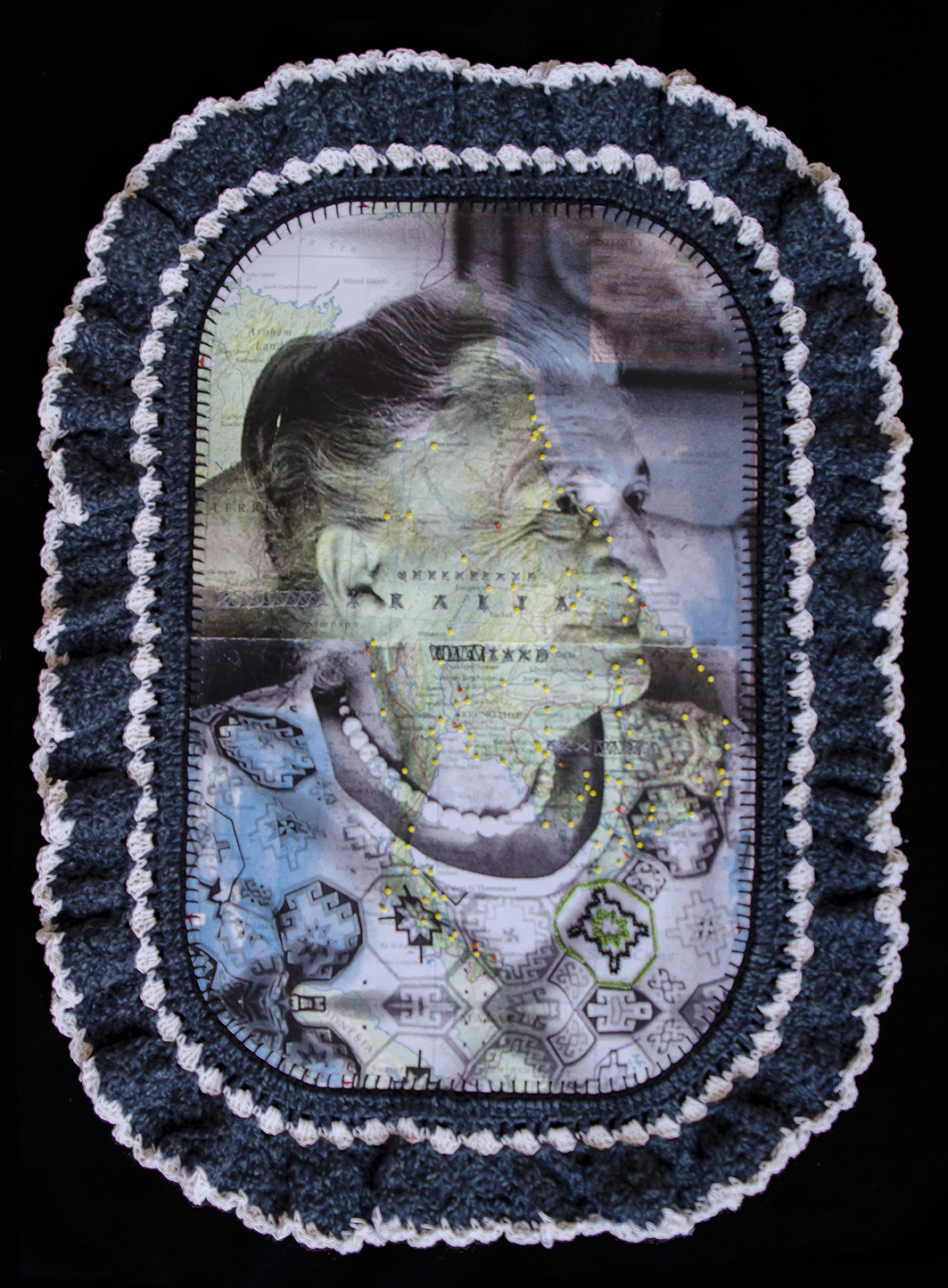
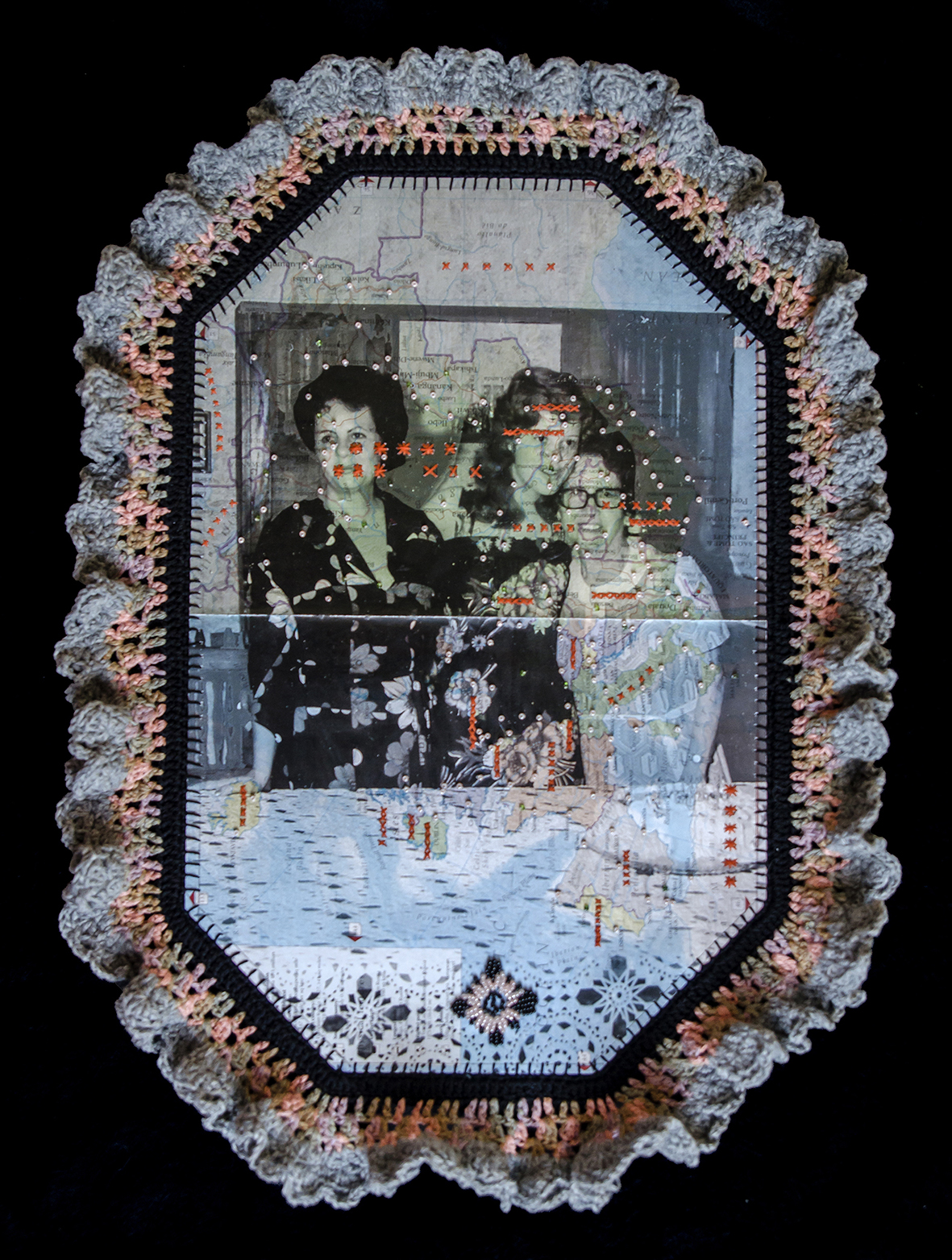
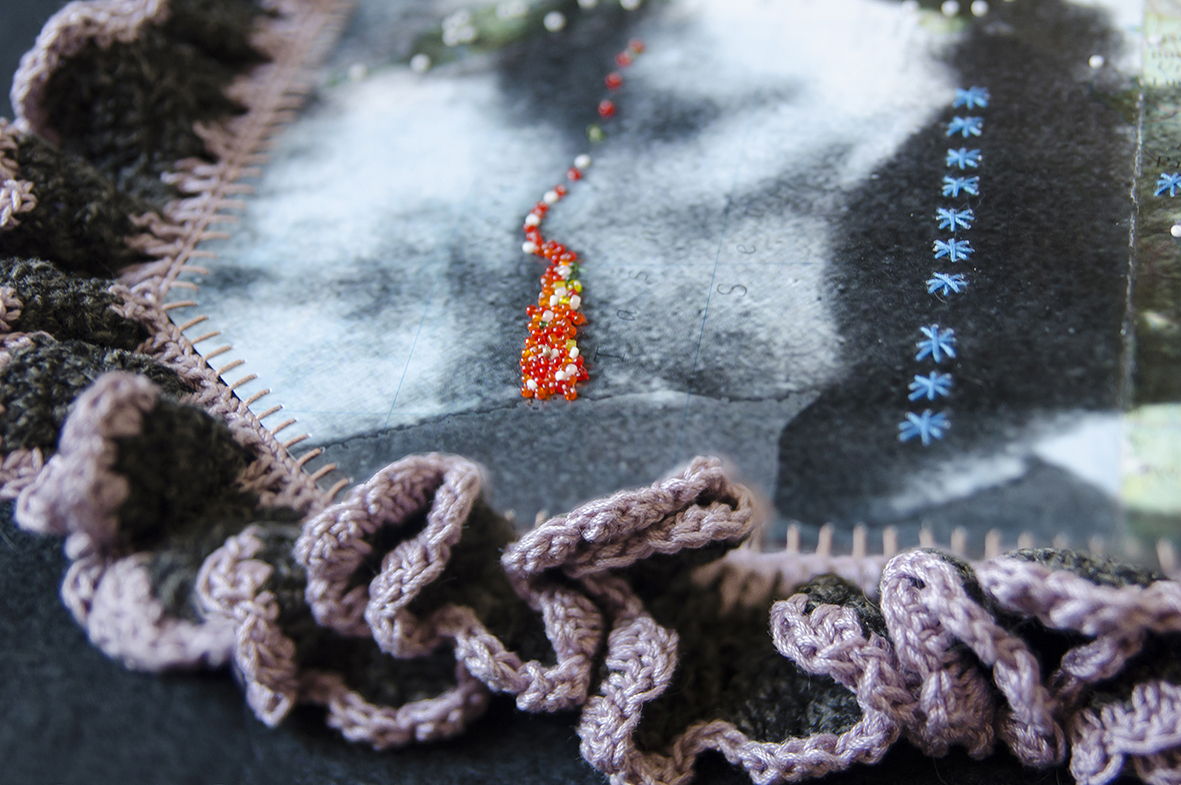
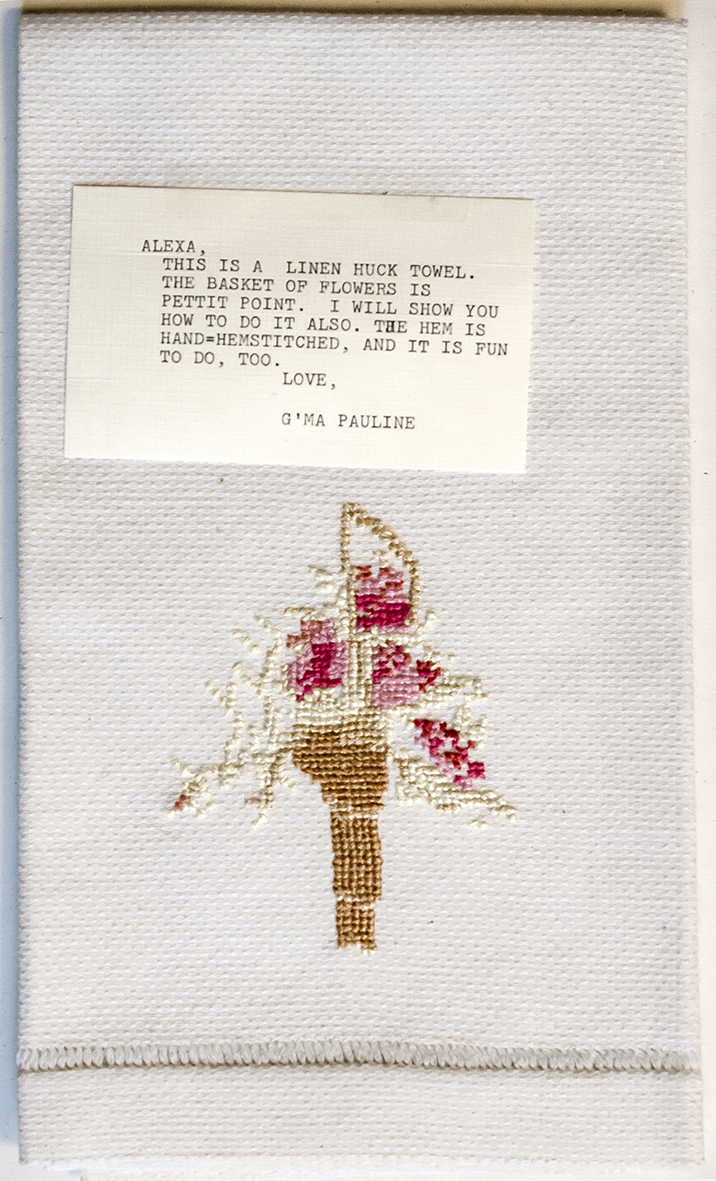
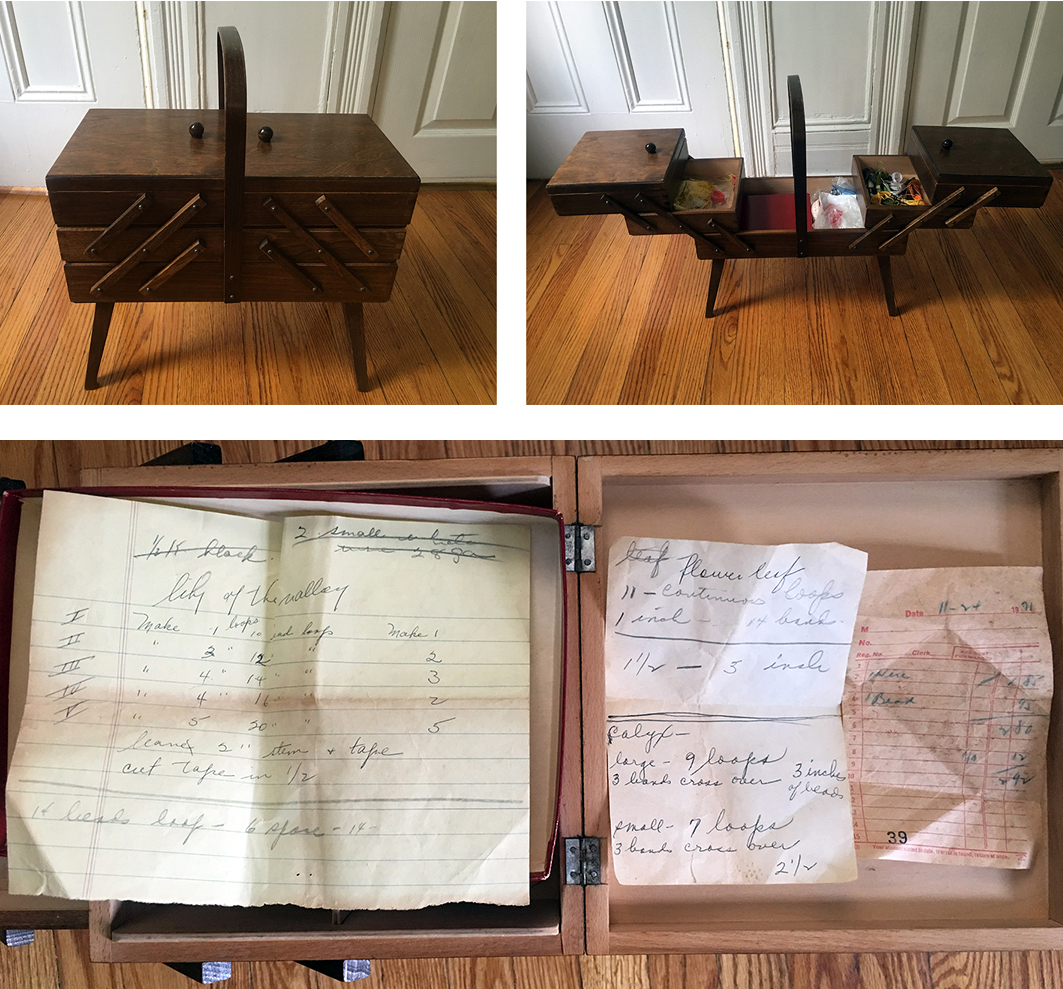
They arrive as pieces, memories, documents, traces that carry both intimacy and absence. I work on them directly. I print the images on atlas pages, and I intervene them with thread, with materials that also come from that sewing box. The gesture is slow. It requires staying with the image, crossing it, insisting on it. These portraits coexist without resolving into a unified history. Each one opens a relation between personal memory and broader historical conditions that have shaped what is visible and what is not. I am not trying to restore what has been erased; I am working within those fractures. What emerges is not an archive in the institutional sense. It is something that remains open, unstable, and in relation.